Organic Modification of Chitosan: An Overview
DOI:
https://doi.org/10.47419/bjbabs.v5i02.280Keywords:
Biopolymer, chitosan, organic modification, graft copolymerization, biocompatibility, biodegradabilityAbstract
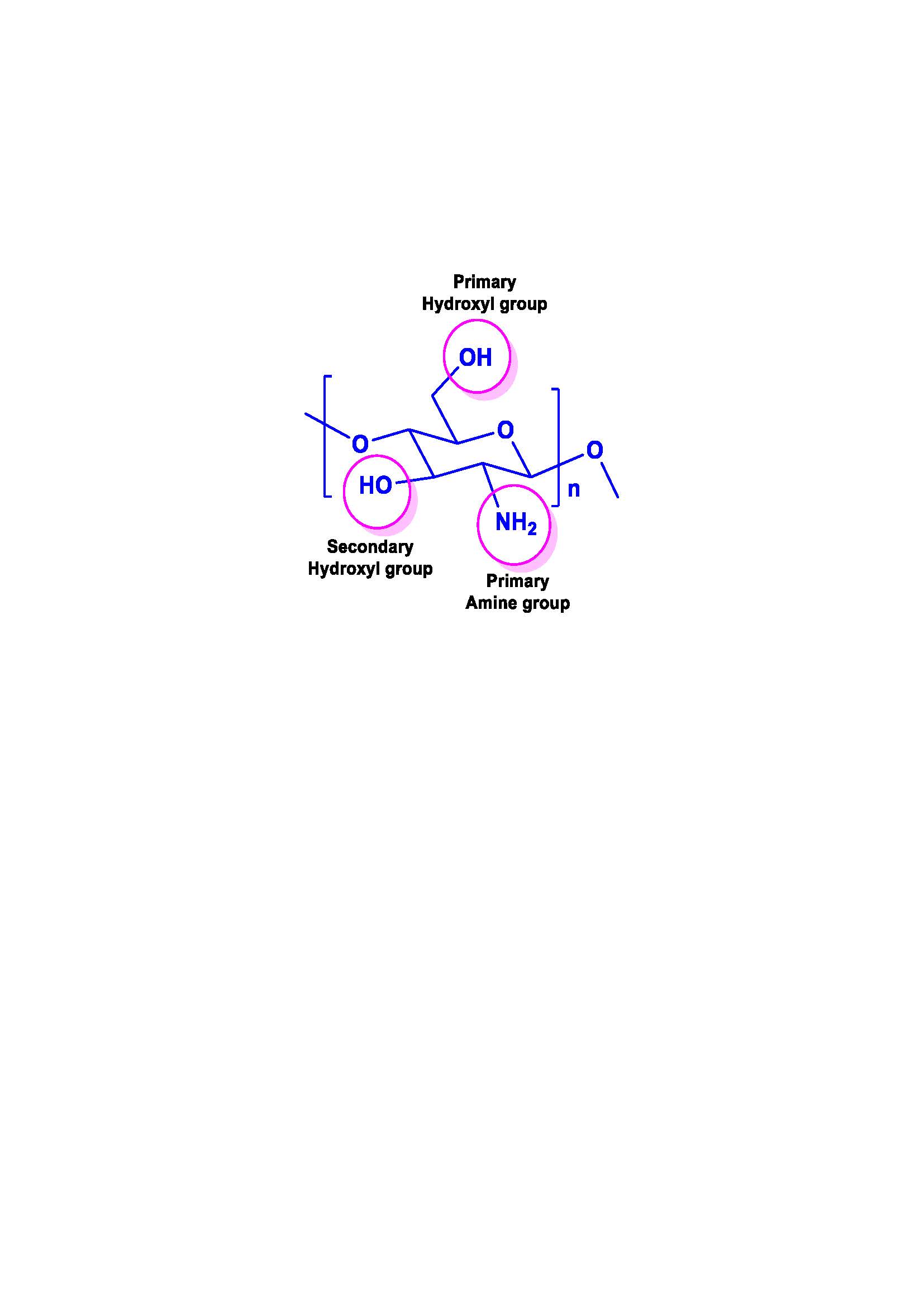
Alkaline deacetylation of chitin yields chitosan, a naturally occurring polymer with remarkable biological qualities like immunological, antibacterial, and wound healing capabilities. Recently, there has been an increase in interest in modifying chitosan chemically to increase its solubility and expand its uses. The usual method for obtaining chitosan is to deacetylate chitin in an alkaline environment. Chitin is one of the most common organic molecules, generated by biosynthesis, second only to cellulose yearly. Chitin plays a significant role in the exoskeleton of animals, particularly insects, mollusks, and crustaceans. It is also the main fibrillar polymer found in some fungi’s cell walls. Composed of glucosamine and N-acetyl glucosamine units connected by β (1–4) glycosidic linkages, chitosan is a linear polysaccharide. The degree of deacetylation refers to the amount of glucosamine present. Actually, in a broad sense. This study reviews the major chitosan chemical changes that have been suggested in the literature. Furthermore, a wide variety of derivatives with a wide range of uses are produced by these chemical alterations. Instances of recent and pertinent instances of the various uses are provided with a focus on tissue engineering, medication delivery, and environmental applications. Looking ahead, the future of chitosan modification appears bright, driven by advancements in smart polymers, green chemistry, and nanotechnology. These developments are facilitating the creation of tailored materials with diverse applications, further expanding the potential utility of chitosan in various fields.
Downloads
References
Wang W, Meng Q, Li Q, Liu J, Zhou M, Jin Z, et al. Chitosan derivatives and their application in biomedicine. International journal of molecular sciences. 2020;21(2):487–487. doi.org/10.3390/ijms21020487. DOI: https://doi.org/10.3390/ijms21020487
40-Hammood AJ, Al-Ameri SA, Al-Qaisi ZHJ. Synthesis, Characterization and Kinetic Study of poly (vinyl acetate)-g-Chitosan and its Use in Removal of Cad- mium (II) ions from Water. Al-Nahrain Journal of Science. 2019;22(2):1–11. 10.22401/ANJS.22.2.01. DOI: https://doi.org/10.22401/ANJS.22.2.01
Kumar MR, Muzzarelli R, Muzzarelli C, Sashiwa H, Domb AJ. Chitosan chem- istry and pharmaceutical perspectives. Chemical reviews. 2004;104(12):6017–6084. doi.org/10.1021/cr030441b. DOI: https://doi.org/10.1021/cr030441b
Ardean C, Davidescu CM, Nemeş NS, Negrea A, Ciopec M, Duteanu N, et al. Fac- tors influencing the antibacterial activity of chitosan and chitosan modified by func- tionalization. International Journal of Molecular Sciences. 2021;22(14):7449–7449. doi.org/10.3390/ijms22147449. DOI: https://doi.org/10.3390/ijms22147449
24-Aljawish A, Chevalot I, Jasniewski J, Scher J, Muniglia L. Enzymatic synthesis of chitosan derivatives and their potential applications. Journal of Molecular Catalysis B: Enzymatic. 2015;112:25–39. doi.org/10.1016/j.molcatb.2014.10.014. DOI: https://doi.org/10.1016/j.molcatb.2014.10.014
Qu B, Luo Y. Chitosan-based hydrogel beads: Preparations, modifications and appli- cations in food and agriculture sectors-A review. International journal of biological macromolecules. 2020;152:437–448. doi.org/10.1016/j.ijbiomac.2020.02.240. DOI: https://doi.org/10.1016/j.ijbiomac.2020.02.240
Sashiwa H, Shigemasa Y, Roy R. Synthesis of dendronized chitosan− sialic acid hybrid using convergent grafting of preassembled dendrons built on gallic acid and Tri (ethylene glycol) backbone. Macromolecules. 2001;10(12):3905–3909. doi.org/10.1021/ma001832k. DOI: https://doi.org/10.1021/ma001832k
Kaczmarek MB, Struszczyk-Swita K, Li X, Szczęsna-Antczak M, Daroch M. Enzy- matic modifications of chitin, chitosan, and chitooligosaccharides. Frontiers in bio- engineering and biotechnology. 2019;7:243–243. doi.org/10.3389/fbioe.2019.00243. DOI: https://doi.org/10.3389/fbioe.2019.00243
41-Kumbhare M, Surana AR, Morankar PG. Nose-to-brain delivery of insulin nanoparticles for diabetes management: A review. Baghdad Jour- nal of Biochemistry and Applied Biological Sciences. 2023;4(02):39–49. doi.org/10.47419/bjbabs.v4i01.178. DOI: https://doi.org/10.47419/bjbabs.v4i01.178
Kurita K, Ikeda H, Yoshida Y, Shimojoh M, Harata M. Chemoselective protection of the amino groups of chitosan by controlled phthaloylation: facile preparation of a precursor useful for chemical modifications. Biomacromolecules. 2002;3(1):1–4. doi.org/10.1021/bm0101163. DOI: https://doi.org/10.1021/bm0101163
Mittal H, Ray SS, Kaith BS, Bhatia JK, Sharma J, Alhassan SM. Recent progress in the structural modification of chitosan for applications in diver- sified biomedical fields. European Polymer Journal. 2018;109:402–434. doi.org/10.1016/j.eurpolymj.2018.10.013. DOI: https://doi.org/10.1016/j.eurpolymj.2018.10.013
Mourya VK, Inamdar NN. Chitosan-modifications and applications: Oppor- tunities galore.Reactive and Functional polymers. 2008;68:1013–1051. doi.org/10.1016/j.reactfunctpolym.2008.03.002. DOI: https://doi.org/10.1016/j.reactfunctpolym.2008.03.002
Bakshi PS, Selvakumar D, Kadirvelu K, Kumar NS. Chitosan as an envi- ronment friendly biomaterial-a review on recent modifications and applica- tions. International journal of biological macromolecules. 2020;150:1072–1083. doi.org/10.1016/j.ijbiomac.2019.10.113. DOI: https://doi.org/10.1016/j.ijbiomac.2019.10.113
26-Thakur VK, Thakur MK. Recent advances in graft copolymerization and applications of chitosan: a review. ACS Sustainable Chemistry & Engineering. 2014;2(12):2637–2652. doi.org/10.1021/sc500634p. DOI: https://doi.org/10.1021/sc500634p
Chopin N, Guillory X, Weiss P, Bideau JL, Colliec-Jouault S. Design polysaccharides of marine origin: chemical modifications to reach advanced versatile compounds.Current Organic Chemistry. 2014;18(7):867–895. DOI: https://doi.org/10.2174/138527281807140515152334
dx.doi.org/10.2174/138527281807140515152334.
Ji, Wang J, Yu L, Chen H, Zhao Y, Zhang Y, et al. Chemical modifications of chitosan and its applications. Polymer-Plastics Technology and Engineering. 2014;53(14):1494–1505. doi.org/10.1080/03602559.2014.909486. DOI: https://doi.org/10.1080/03602559.2014.909486
Argüelles-Monal WM, Lizardi-Mendoza J, Fernández-Quiroz D, Recillas-Mota MT, Montiel-Herrera M. Chitosan derivatives: introducing new functionali- ties with a controlled molecular architecture for innovative materials. Polymers. 2018;10(3):342–342. doi.org/10.3390/polym10030342. DOI: https://doi.org/10.3390/polym10030342
5-Negm NA, Hefni HH, Abd-Elaal AA, Badr EA, Kana MTA. Advance- ment on modification of chitosan biopolymer and its potential applica- tions. International journal of biological macromolecules. 2020;152:681–702. doi.org/10.1016/j.ijbiomac.2020.02.196. DOI: https://doi.org/10.1016/j.ijbiomac.2020.02.196
35-Cumpstey I. Chemical modification of polysaccharides International schol- arly research notices. 2013;Available from: http://dx.doi.org/10.1155/2013/417672. doi.org/10.1155/2013/417672. DOI: https://doi.org/10.1155/2013/417672
Abed RN, Sattar MA, Hameed SS, Ahmed DS, Al-Baidhani M, Kadhom M, et al. Optical and morphological properties of poly (vinyl chloride)-nano-chitosan com- posites doped with TiO2 and Cr2O3 nanoparticles and their potential for solar energy applications. Chemical Papers. 2023;77(2):757–769. doi.org/10.1007/s11696- 022-02512-6. DOI: https://doi.org/10.1007/s11696-022-02512-6
8-Aranaz I, Alcántara AR, Civera MC, Arias C, Elorza B, Caballero AH, et al. Chi- tosan: An overview of its properties and applications. Polymers. 2021;13(19):3256– 3256. doi.org/10.3390/polym13193256. DOI: https://doi.org/10.3390/polym13193256
Alves NM, Mano JF. Chitosan derivatives obtained by chemical modifications for biomedical and environmental applications. International journal of biological macromolecules. 2008;43(5):401–414. doi.org/10.1016/j.ijbiomac.2008.09.007. DOI: https://doi.org/10.1016/j.ijbiomac.2008.09.007
Saleh TAK, Al-Tikrity ET, Yousif E, Al-Mashhadani MH, Jawad AH. Prepa- ration of Schiff bases derived from chitosan and investigate their photostabil- ity and thermal stability. Physical Chemistry Research. 2022;10(4):549–557. doi.org/10.22036/PCR.2022.333808.2051.
Knidri H, Belaabed R, Addaou A, Laajeb A, Lahsini A. Extraction, chemical modifi- cation and characterization of chitin and chitosan. International journal of biological macromolecules. 2018;120:1181–1189. doi.org/10.1016/j.ijbiomac.2018.08.139. DOI: https://doi.org/10.1016/j.ijbiomac.2018.08.139
Silva SS, Mano JF, Reis RL. Ionic liquids in the processing and chemical mod- ification of chitin and chitosan for biomedical applications. Green Chemistry. 2017;19(5):1208–1220. doi.org/10.1039/C6GC02827F. DOI: https://doi.org/10.1039/C6GC02827F
Valdez O, Champagne-Hartley R, Saldívar-Guerra E, Champagne P, Cunningham MF. Modification of chitosan with polystyrene and poly (n-butyl acrylate) via nitroxide-mediated polymerization and grafting from approach in homogeneous media. Polymer Chemistry. 2015;6(15):2827–2836. doi.org/10.1039/C5PY00028A. DOI: https://doi.org/10.1039/C5PY00028A
23-Nornberg AB, De Aquino TF, Martins CC, Luchese C, Wilhelm EA, Jacob RG, et al. Organoselenium-chitosan derivative: Synthesis via “click” reaction, character-
ization and antioxidant activity. International Journal of Biological Macromolecules. 2021;191:19–26. doi.org/10.1016/j.ijbiomac.2021.09.053. DOI: https://doi.org/10.1016/j.ijbiomac.2021.09.053
32-Alqahtani NF. Functionalized imidazolium ionic liquids-modified chitosan materials: From synthesis approaches to applications Reactive and Functional Poly- mers. 2023;p. 105779–105779. doi.org/10.1016/j.reactfunctpolym.2023.105779. DOI: https://doi.org/10.1016/j.reactfunctpolym.2023.105779
Essawy AA, Hefni H, El-Nggar AM. Biocompatible and Biodegradable Chitosan Composites in Wound Healing Application. Situ Novel Photo-Induced Skin Regen- eration Approach Sustainable Polymer Composites and Nanocomposites. 2019;p. 143–183. doi.org/10.1007/978-3-030-05399-45. DOI: https://doi.org/10.1007/978-3-030-05399-4_5
Sahariah P, Másson M. Antimicrobial chitosan and chitosan derivatives: A review
of the structure-activity relationship. Biomacromolecules. 2017;18(11):3846–3868. doi/abs/10.1021/acs.biomac.7b01058. DOI: https://doi.org/10.1021/acs.biomac.7b01058
Vakili M, Rafatullah M, Salamatinia B, Abdullah AZ, Ibrahim MH, Tan KB, et al. Application of chitosan and its derivatives as adsorbents for dye removal from water and wastewater: A review. Carbohydrate polymers. 2014;113:115–130. Available from: https://doi.org/10.1016/j.carbpol.2014.07.007. doi.org/10.1016/j.carbpol.2014.07.007. DOI: https://doi.org/10.1016/j.carbpol.2014.07.007
Abdelwahab HE, Hassan SY, Yacout GA, Mostafa MA, Sadek MM. Synthesis and biological evaluation of new imine-and amino-chitosan derivatives. Polymers. 2015;7(12):2690–2700. doi.org/10.3390/polym7121532. DOI: https://doi.org/10.3390/polym7121532
24-Aljawish A, Chevalot I, Jasniewski J, Scher J, Muniglia L. Enzymatic synthesis of chitosan derivatives and their potential applications. Journal of Molecular Catalysis B: Enzymatic. 2015;112:25–39. doi.org/10.1016/j.molcatb.2014.10.014. DOI: https://doi.org/10.1016/j.molcatb.2014.10.014
Ji, Wang J, Yu L, Chen H, Zhao Y, Zhang Y, et al. Chemical modifications of chitosan and its applications. Polymer-Plastics Technology and Engineering. 2014;53(14):1494–1505. doi.org/10.1080/03602559.2014.909486. DOI: https://doi.org/10.1080/03602559.2014.909486
Kurita K, Ikeda H, Yoshida Y, Shimojoh M, Harata M. Chemoselective protection of the amino groups of chitosan by controlled phthaloylation: facile preparation of a precursor useful for chemical modifications. Biomacromolecules. 2002;3(1):1–4. doi.org/10.1021/bm0101163. DOI: https://doi.org/10.1021/bm0101163
Wang W, Meng Q, Li Q, Liu J, Zhou M, Jin Z, et al. Chitosan derivatives and their application in biomedicine. International journal of molecular sciences. 2020;21(2):487–487. doi.org/10.3390/ijms21020487. DOI: https://doi.org/10.3390/ijms21020487
Ardean C, Davidescu CM, Nemeş NS, Negrea A, Ciopec M, Duteanu N, et al. Fac- tors influencing the antibacterial activity of chitosan and chitosan modified by func- tionalization. International Journal of Molecular Sciences. 2021;22(14):7449–7449. 10.3390/ijms22147449. DOI: https://doi.org/10.3390/ijms22147449
Essawy AA, Hefni H, El-Nggar AM. Biocompatible and Biodegradable Chitosan Composites in Wound Healing Application. Situ Novel Photo-Induced Skin Regen- eration Approach Sustainable Polymer Composites and Nanocomposites. 2019;p. 143–183. doi.org/10.1007/978-3-030-05399-45. DOI: https://doi.org/10.1007/978-3-030-05399-4_5
Vakili M, Rafatullah M, Salamatinia B, Abdullah AZ, Ibrahim MH, Tan KB, et al. Application of chitosan and its derivatives as adsorbents for dye removal from water and wastewater: A review. Carbohydrate polymers. 2014;113:115–130. doi.org/10.1016/j.carbpol.2014.07.007. DOI: https://doi.org/10.1016/j.carbpol.2014.07.007
Mittal H, Ray SS, Kaith BS, Bhatia JK, Sharma J, Alhassan SM. Recent progress in the structural modification of chitosan for applications in diver- sified biomedical fields. European Polymer Journal. 2018;109:402–434. doi.org/10.1016/j.eurpolymj.2018.10.013. DOI: https://doi.org/10.1016/j.eurpolymj.2018.10.013
Knidri H, Belaabed R, Addaou A, Laajeb A, Lahsini A. Extraction, chemical modifi- cation and characterization of chitin and chitosan. International journal of biological macromolecules. 2018;120:1181–1189. doi.org/10.1016/j.ijbiomac.2018.08.139. DOI: https://doi.org/10.1016/j.ijbiomac.2018.08.139
Additional Files
Published
Issue
Section
Categories
License
Copyright (c) 2025 Mohammed Al-Mashhadani, Hadeel Adil, Huda Ghazi Naser, Hanan A. Ibraheem, Rasha Saad Jwad, Sohad A. Alshareef, Amer Adnan Hasan, Sanjay Ghosh, Hussein A. Hamzah, Emad Yousif

This work is licensed under a Creative Commons Attribution 4.0 International License.
The authors retain all proprietary rights, including copyright, such as patent and trademark rights and rights to any process or procedure described in the article.