The Role of Hyaluronic Acid (Gengigel) in Periodontal Therapy
A Literature Review
DOI:
https://doi.org/10.47419/bjbabs.v7i1.436Keywords:
Hyaluronic acid, Gelatin, periodontal therapy, wounds healing, gingigel, gingival inflammationAbstract
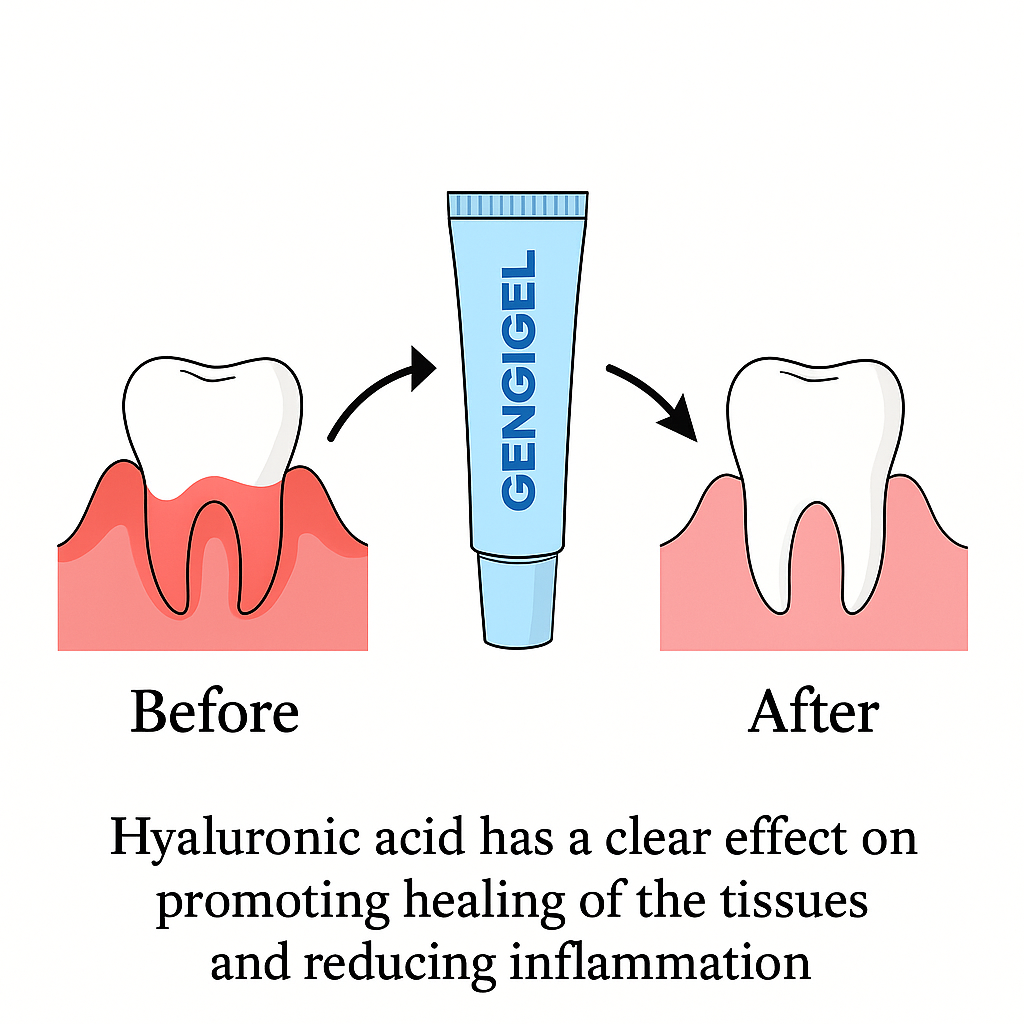
Background: Hyaluronic acid (HA) is a naturally occurring glycosaminoglycan widely distributed in connective tissues, where it plays a critical role in maintaining tissue hydration, cell proliferation, and wound healing. In periodontal therapy, the topical application of HA, particularly in its commercial form Gengigel, has attracted considerable attention for its potential to enhance clinical outcomes through anti-inflammatory, bacteriostatic, and regenerative mechanisms.
Objective: This narrative literature review aims to summarize and analyze the available evidence on the role of hyaluronic acid, particularly Gengigel, in non-surgical and surgical periodontal therapy, focusing on its biological properties, mechanisms of action, and clinical outcomes.
Methods: A narrative literature search was performed using PubMed, Scopus, and ScienceDirect (Elsevier) databases for publications between 2020 and 2025. Studies evaluating the adjunctive use of hyaluronic acid or Gengigel in periodontal treatment were identified. Around 20–30 relevant studies were reviewed and qualitatively analyzed to assess their findings regarding inflammation control, wound healing, and overall periodontal improvement.
Results: The reviewed studies consistently reported that topical Gengigel significantly reduces gingival inflammation, bleeding on probing, and post-treatment discomfort. Its anti-inflammatory effect is attributed to inhibition of prostaglandin and cytokine activity, while its regenerative capacity promotes fibroblast proliferation, angiogenesis, and epithelial migration. Clinical trials also indicate that HA enhances wound healing and accelerates soft-tissue repair when used as an adjunct to scaling and root planing. The hydrating properties of HA contribute to improved tissue elasticity and resilience, making it a valuable component in the non-surgical management of periodontal conditions...
Downloads
Additional Files
Published
Issue
Section
Categories
License
Copyright (c) 2026 Hareth Alrikabi, Lamyaa M Saeed

This work is licensed under a Creative Commons Attribution 4.0 International License.
The authors retain all proprietary rights, including copyright, such as patent and trademark rights and rights to any process or procedure described in the article.